Sciatica Treatment in Chennai
Relieve Nerve Pain | Improve Mobility | Support Lower Back Health
More Treatments
Book a consultation
An assessment appointment with the knee care team.
Sciatica Treatment in Chennai
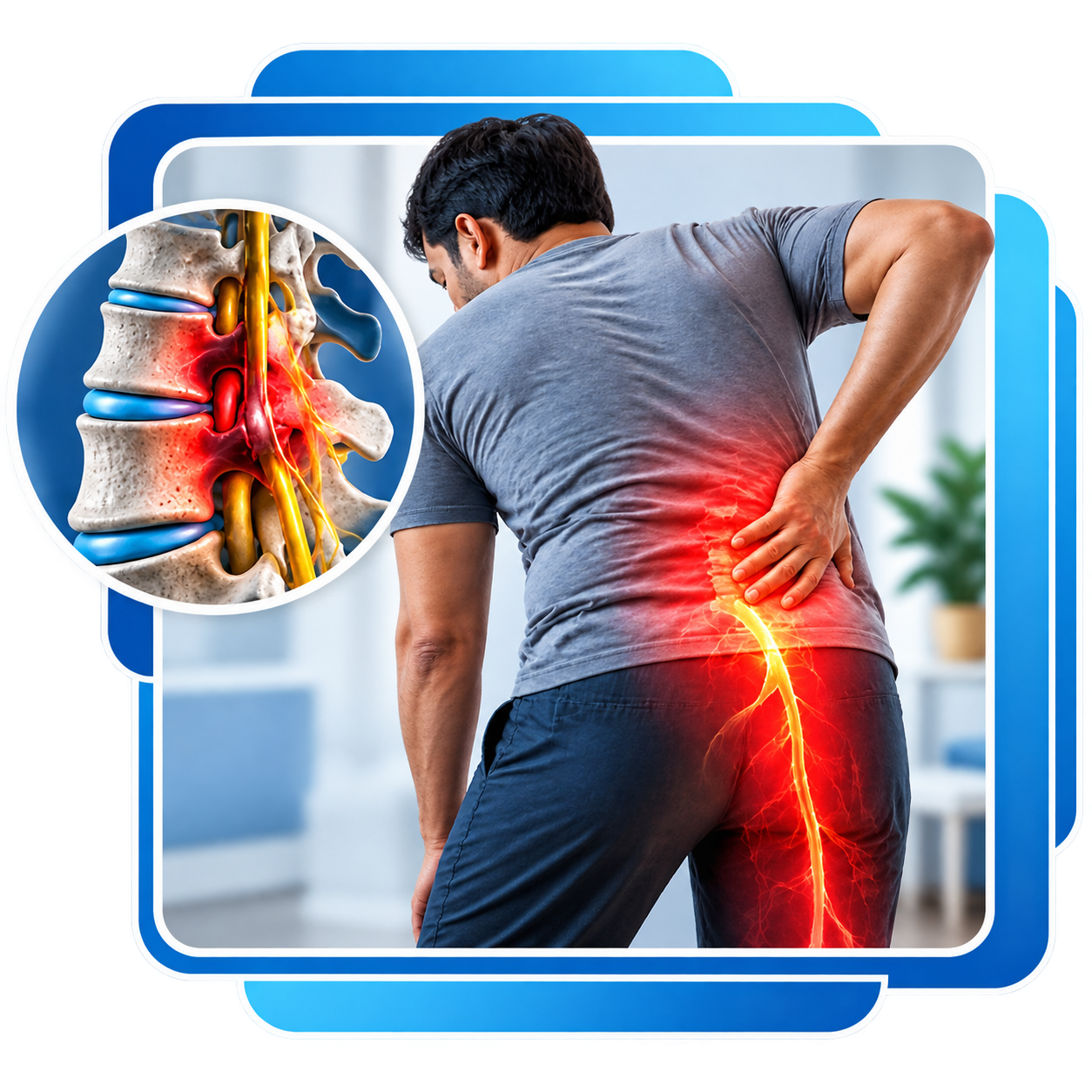
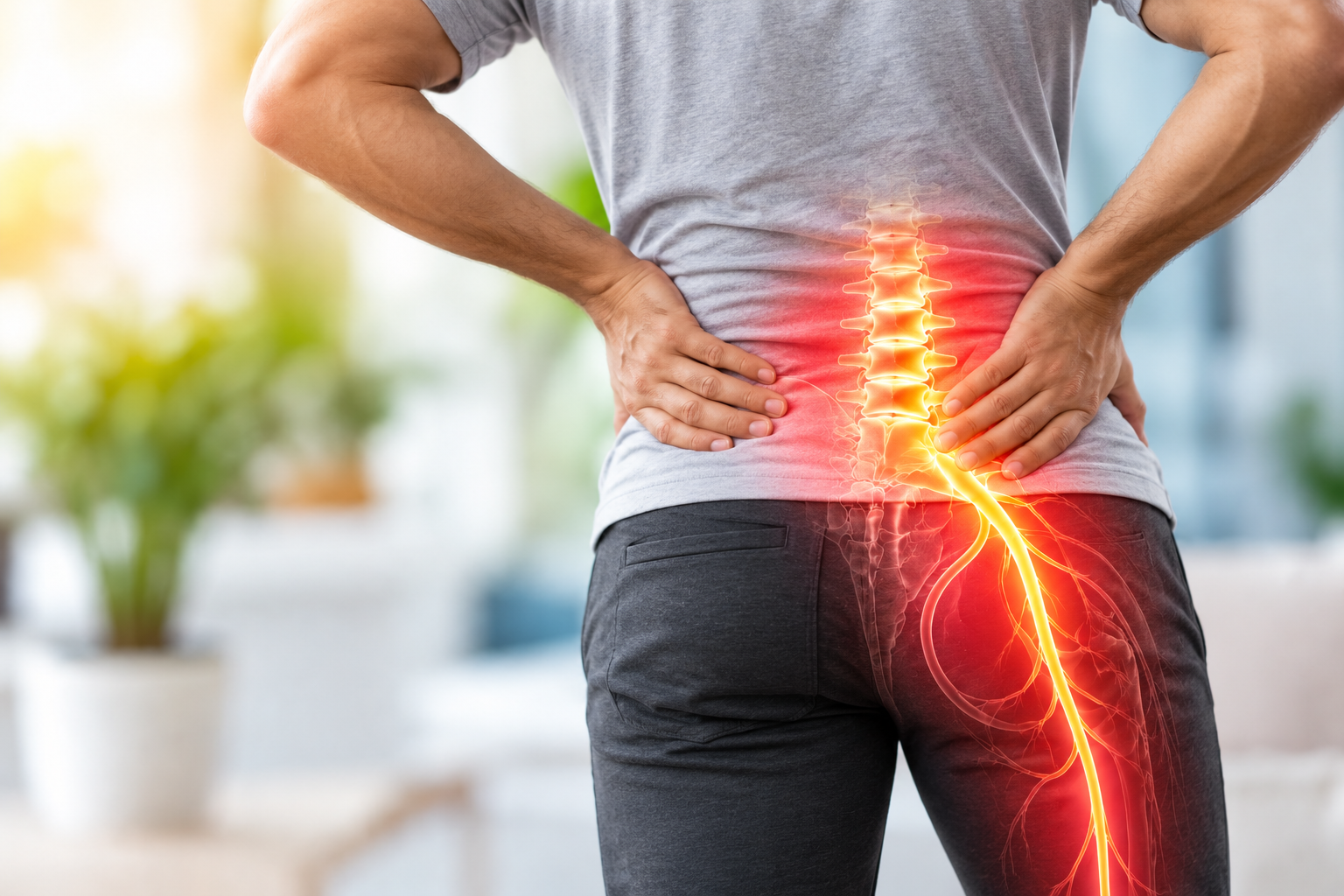
Sciatica refers to pain that occurs when the sciatic nerve or its nerve roots become irritated or compressed. The discomfort usually begins in the lower back or buttock and may travel down the back of the thigh, leg or foot.
At Daisy Hospital, sciatica treatment in Chennai is planned according to each patient’s symptoms, pain pattern, spinal condition, mobility and overall health. Our integrated approach may include Ayurveda, Siddha, Naturopathy & Yoga, external therapies, therapeutic exercises, posture correction, diet guidance and supportive medical care as appropriate.
The aim is to help reduce pain, support nerve comfort, improve mobility, strengthen the lower back and surrounding muscles, and help patients return to daily activities more comfortably.
What Causes Sciatica?
Sciatica usually occurs when the sciatic nerve or the nerve roots that form it become irritated or compressed.
Lumbar Disc Problems
- Lumbar disc bulge
- Lumbar disc herniation
- Degenerative disc changes
- Disc-related nerve compression
Spinal Conditions
- Lumbar spondylosis
- Lumbar spinal stenosis
- Bone spurs
- Degenerative changes in spinal joints
- Spondylolisthesis in some patients
Other Contributing Factors
- Prolonged sitting
- Poor posture
- Heavy lifting
- Repetitive bending
- Previous lower-back injury
- Weak core muscles
- Excess body weight
Not every episode of pain radiating down the leg is sciatica, so proper clinical assessment is important.
What Are the Symptoms of Sciatica?
Sciatica symptoms may vary depending on the nerve root involved and the degree of irritation or compression.
Common symptoms include:
- Lower back pain
- Pain in the buttock
- Pain radiating down one leg
- Burning or sharp nerve pain
- Tingling or pins-and-needles sensation
- Numbness in the leg or foot
- Leg weakness
- Pain while sitting for long periods
- Pain while standing or walking
- Difficulty bending
- Reduced mobility
- Discomfort while performing daily activities
Some patients experience pain mainly in the leg with little or no lower-back pain.
Conditions & Spine Problems Associated with Sciatica
Sciatica may be related to several lower-spine conditions.
Common associated problems include:
- Lumbar disc bulge
- Lumbar disc herniation
- Lumbar spondylosis
- Lumbar spinal stenosis
- Lumbar radiculopathy
- Degenerative disc disease
- Facet joint degeneration
- Spondylolisthesis
- Piriformis-related sciatic nerve irritation in some cases
- Lower-back muscle stiffness
- Reduced spinal mobility
A clinical examination helps identify the likely cause and determine the most appropriate care plan.
How Is Sciatica Diagnosed?
Diagnosis begins with a detailed review of the patient’s pain pattern, symptoms, medical history and mobility.
Evaluation may include:
- Physical examination
- Assessment of lower-back movement
- Straight leg raise test
- Muscle strength testing
- Reflex testing
- Sensory examination
- Walking and posture assessment
- Lumbar spine X-ray when required
- MRI scan when indicated
- CT scan in selected cases
- Nerve conduction studies or EMG when required
What Can Be the Complications of Sciatica?
Many cases improve with appropriate conservative care. However, persistent or severe nerve compression may lead to ongoing neurological symptoms.
Possible complications may include:
- Persistent leg pain
- Chronic lower-back discomfort
- Recurrent episodes of sciatica
- Tingling or numbness
- Reduced leg strength
- Difficulty walking
- Reduced mobility
- Difficulty performing daily activities
- Ongoing nerve-related symptoms
Severe or progressive neurological symptoms should be assessed promptly.
What Is the Treatment for Sciatica?
Treatment depends on the cause of sciatica, severity of symptoms, neurological findings and overall health.
Many patients can initially be managed with non-surgical treatment.
Medications
Doctors may prescribe suitable medicines to help manage pain, inflammation or nerve-related symptoms.
Medication should be used according to the treating doctor’s advice.
Physical Therapy
Physiotherapy may help improve spinal mobility, muscle strength and posture.
A rehabilitation plan may include:
- Gentle lower-back mobility exercises
- Core strengthening
- Hip and gluteal strengthening
- Hamstring flexibility exercises
- Nerve mobility exercises where appropriate
- Posture correction
- Ergonomic guidance
Lifestyle Management
Patients may be advised to:
- Avoid prolonged sitting
- Take regular movement breaks
- Maintain healthy posture
- Avoid sudden heavy lifting
- Use correct lifting techniques
- Maintain a healthy body weight
- Follow doctor-recommended exercises
Specialist Evaluation
Patients with severe nerve compression, progressive weakness or persistent symptoms despite conservative treatment may require evaluation by an appropriate spine specialist.
Ayurvedic & Siddha Therapies for Sciatica
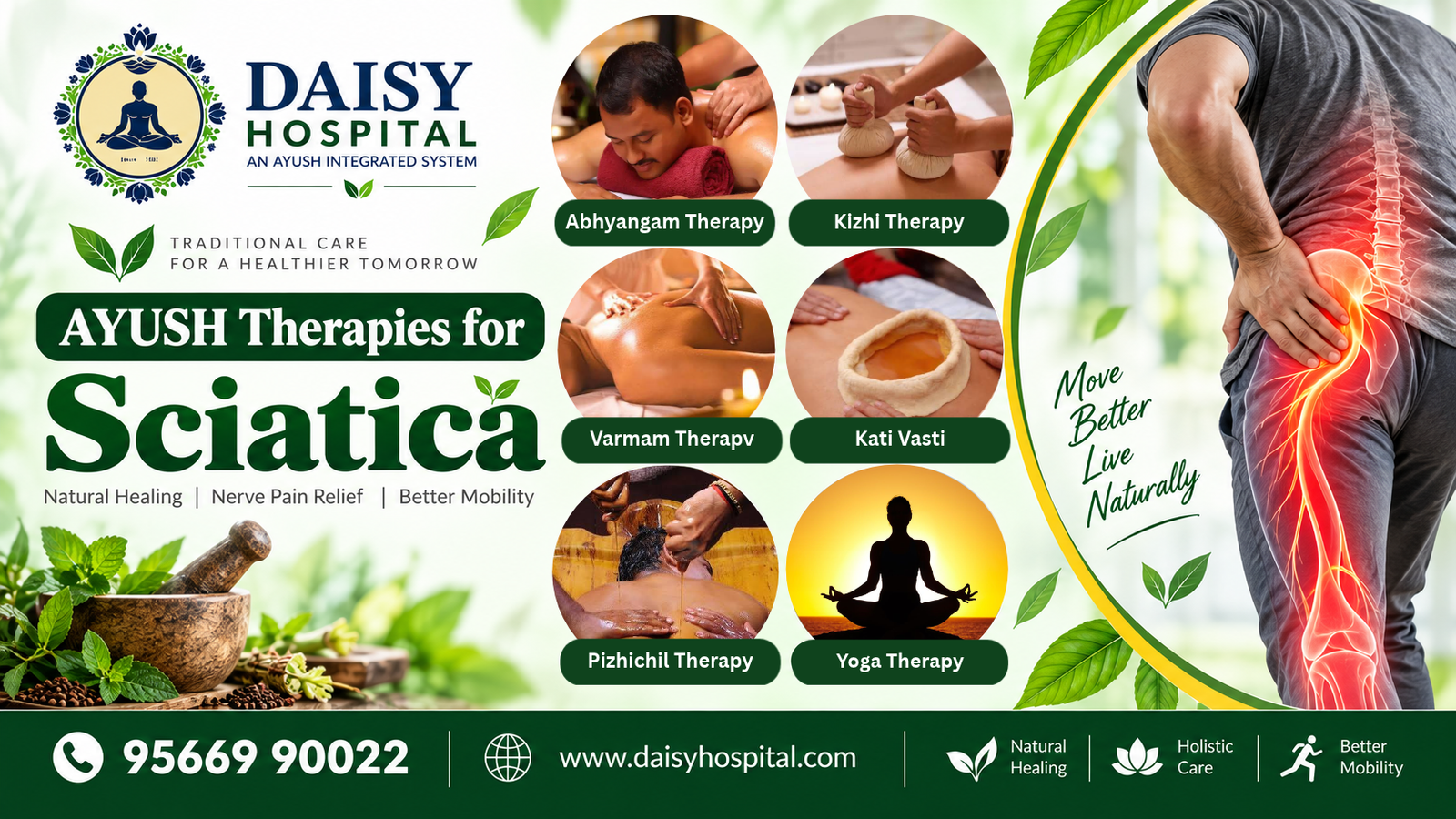
At Daisy Hospital, selected Ayurvedic and Siddha therapies may be used as supportive care based on the patient’s symptoms, spinal condition and overall health.
1. Abhyangam Therapy
Traditional Ayurvedic oil massage may help support muscular relaxation and general comfort around the lower back, hip and leg.
2. Kizhi Therapy
Warm herbal poultice therapy may be used as supportive care for muscular stiffness and musculoskeletal discomfort.
3. Greeva Vasti Therapy
Kati Vasti is a traditional Ayurvedic procedure in which warm medicated oil is retained over the lower-back region for a specified period.
It may be used as supportive care for lower-back comfort under professional supervision.
4. Varmam Therapy
Traditional Siddha Varmam therapy involves controlled stimulation of selected points and may be used as supportive care for mobility and musculoskeletal discomfort.
5. Pizhichil Therapy
Warm medicated oil therapy may be included as part of a supportive relaxation and musculoskeletal wellness plan.
6. Therapeutic Yoga
Condition-specific yoga, stretching, breathing exercises and strengthening may support flexibility, posture and mobility.
7. Diet & Lifestyle Guidance
Personalized diet and lifestyle recommendations may be provided according to body weight, daily routine and overall health.
Why Choose Daisy Hospital for Sciatica Treatment in Chennai?
Daisy Hospital provides personalized care for people experiencing sciatica, lower-back pain, leg pain, tingling, numbness and reduced mobility.
Our integrated approach may combine Ayurveda, Siddha, Naturopathy & Yoga with appropriate supportive medical care according to individual needs.
Experienced Doctors
Our doctors assess pain pattern, spinal condition, neurological symptoms and overall health before planning care.
Personalized Treatment Plans
Treatment is planned according to each patient’s symptoms, cause of sciatica, mobility and medical history.
AYUSH Integrated Care
Ayurveda, Siddha, Naturopathy and Yoga may be incorporated into the supportive care plan where appropriate.
External Therapy Facilities
Selected external therapies may be recommended according to the patient’s symptoms and condition.
Customized Diet Guidance
Diet and lifestyle recommendations may be provided according to individual needs.
Yoga & Posture Support
Gentle stretching, strengthening and mobility exercises may be included to support function.
Diagnostic Support
Relevant clinical investigations and imaging may be recommended when required.
Inpatient Facilities
Hospital-based care is available for patients who require closer observation, treatment or therapy.
Follow-Up Care
Regular follow-up helps monitor pain, nerve-related symptoms and response to treatment.
Patient Recovery Stories – Sciatica Care
Watch patient experience videos to understand individual journeys involving sciatica, lower-back pain, leg pain and related spine problems at Daisy Hospital.
Patients may share their experiences with consultation, supportive therapies, rehabilitation and lifestyle guidance.
Start Your Sciatica Care Journey
Consult the doctors at Daisy Hospital for a personalized assessment and treatment plan based on your lower-back pain, leg pain, nerve symptoms, mobility and overall health.
Frequently Asked Questions
Sciatica refers to pain caused by irritation or compression of the sciatic nerve or its nerve roots. Pain often travels from the lower back or buttock down the leg.
Common symptoms include lower-back pain, buttock pain, pain radiating down the leg, tingling, numbness and sometimes weakness in the leg or foot.
Many cases can be managed with conservative treatment such as medication, physiotherapy, exercises, posture correction and lifestyle changes. Surgery is generally considered only in selected cases.
Selected Ayurvedic therapies may be used as supportive care for muscular relaxation, lower-back comfort and mobility. Appropriate medical evaluation remains important, particularly when neurological symptoms are present.
Consult a doctor when leg pain persists, repeatedly returns, limits daily activities, or is associated with numbness or weakness. Bladder or bowel problems or rapidly worsening weakness require urgent medical evaluation.
Recovery time varies depending on the cause, severity of nerve irritation, overall health and response to treatment.